Culture Guide
Panama Hat History: The Ecuadorian Hat With the Wrong Name
The Panama hat is woven in Ecuador from the toquilla palm; it took the name "Panama" because it was shipped through and sold on the Isthmus of Panama.
Updated · Cigars Panama Editorial Team
Back to the Guide →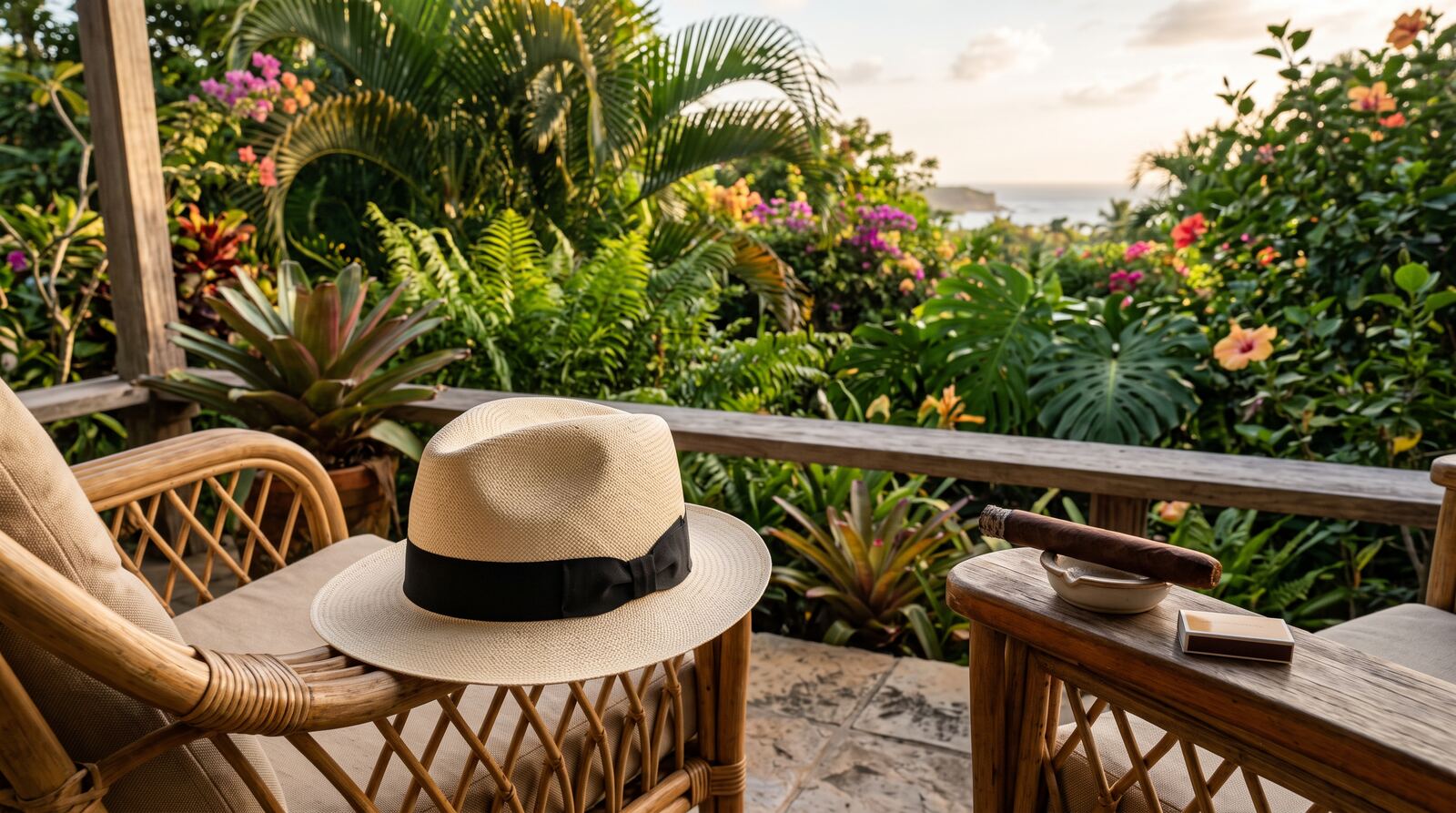
Few objects are as closely linked with cigars as the Panama hat. Think of the classic picture of a man in a linen suit and straw hat with a cigar in hand. Yet the hat has almost nothing to do with Panama.
Made in Ecuador
The Panama hat is woven in Ecuador from the plaited leaves of Carludovica palmata, a palm-like plant known locally as toquilla or jipijapa. In Ecuador it is called the toquilla straw hat. The weaving tradition grew up along the Pacific coast and in the southern highlands, with Montecristi, in Manabí province, famous for the finest hats and the area around Cuenca known for its hat trade and museum.
Why It's Called a Panama
In the 19th century, Ecuadorian hats were shipped to the Isthmus of Panama before being sold abroad, so buyers knew them by the place they bought them. Demand surged during the California Gold Rush, when prospectors crossing the isthmus bought hats for sun protection. In 1906 photographs of President Theodore Roosevelt wearing one while visiting the Panama Canal construction site fixed the name for good.
Grades and Superfinos
Hats are graded by how fine and tight the weave is. The finest, the Montecristi superfinos, can have up to around 3,000 weaves per square inch and take months to make. Only a small number of weavers can still make them.
UNESCO Recognition
In December 2012 UNESCO added the traditional weaving of the Ecuadorian toquilla straw hat to its list of the Intangible Cultural Heritage of Humanity.
The Hat and the Cigar
The Panama hat and the cigar became partners because they belong to the same hot-climate culture: plantation owners, sea captains, colonial officials and later Hollywood stars. Both are natural products shaped by hand, and both reward patience. Ecuador, the hat's real home, is also one of the world's most important cigar wrapper growers; see our sister site's guide to Ecuador wrapper.
How a Panama Hat Is Made
Toquilla palm shoots are harvested before they open, split into fine strands, boiled and dried, sometimes bleached, and then woven by hand starting from the center of the crown. A coarse hat can be woven in a few days; a superfino can take months. After weaving, the hat is finished: excess straw is trimmed, the brim edge is sealed, and the hat is washed, bleached or dyed, blocked into shape and fitted with a band.
Caring for a Panama Hat
- Handle it by the brim, not the crown, to avoid cracking the straw.
- Keep it away from prolonged damp; straw can lose its shape.
- Store it crown-down or on a hat stand, out of direct sun.
- Keep cigar smoke and ash away from a light-colored hat; ash marks show.
Buying One in Panama
Panama hats are sold all over Panama City, especially to visitors. Most are made in Ecuador. A few Panamanian regions also have their own hat traditions, such as the sombrero pintao from Coclé, a woven hat with dark stripes that is a distinct Panamanian craft.
Frequently Asked Questions
Are Panama hats from Panama?
No. They are woven in Ecuador from the toquilla palm.
Why is it called a Panama hat?
Because Ecuadorian hats were shipped through and sold on the Isthmus of Panama, and Theodore Roosevelt was photographed wearing one at the Panama Canal in 1906.
What is a Montecristi superfino?
The finest grade of Panama hat, woven in Montecristi, Ecuador, with up to around 3,000 weaves per square inch.
Is the Panama hat UNESCO-listed?
Yes. Traditional toquilla straw hat weaving was added to UNESCO's Intangible Cultural Heritage list in 2012.
Does Panama have its own hat?
Yes. The sombrero pintao from Coclé province is a traditional Panamanian hat.